
Pest complaint management in rental and multi-family properties is defined as a coordinated system where property managers, tenants, maintenance staff, and licensed pest professionals work together under an Integrated Pest Management (IPM) framework to report, inspect, treat, and prevent infestations. How pest complaints are managed in properties determines not just tenant satisfaction but your legal standing, your maintenance costs, and whether that one mouse sighting turns into a full rodent subdivision behind the walls. Get the system right and complaints resolve fast. Get it wrong and you’re looking at lease disputes, health code violations, and tenants who post reviews that no property manager wants to read.
What are the key roles in managing pest complaints in properties?
The EPA recommends IPM as a team approach that puts prevention first and assigns clear responsibilities to every party involved. Think of it like a relay race. Everyone has to run their leg or the baton hits the floor.
Here is how the responsibilities break down:
- Property managers lead the entire IPM program. They run the reporting system, coordinate licensed pest management professionals (PMPs), enforce lease obligations, and make sure maintenance addresses root causes. EPA guidance is explicit: managers run the system, PMPs execute the treatments.
- Tenants are responsible for timely reporting, maintaining sanitation in their units, and cooperating with scheduled inspections and treatments. A tenant who spots a cockroach and waits three weeks to mention it has made your job significantly harder.
- Licensed pest management professionals conduct inspections, apply targeted treatments, and provide documentation of every visit. That paperwork matters more than most managers realize.
- Maintenance staff handle the structural fixes that let pests in the first place: sealing gaps, fixing leaks, repairing screens. Without them, treatments are just temporary.
Pro Tip: Set up a dedicated pest complaint reporting channel, whether that is a property management app, a dedicated email address, or a phone line. The easier you make it to report, the faster you find out about problems before they spread to neighboring units.
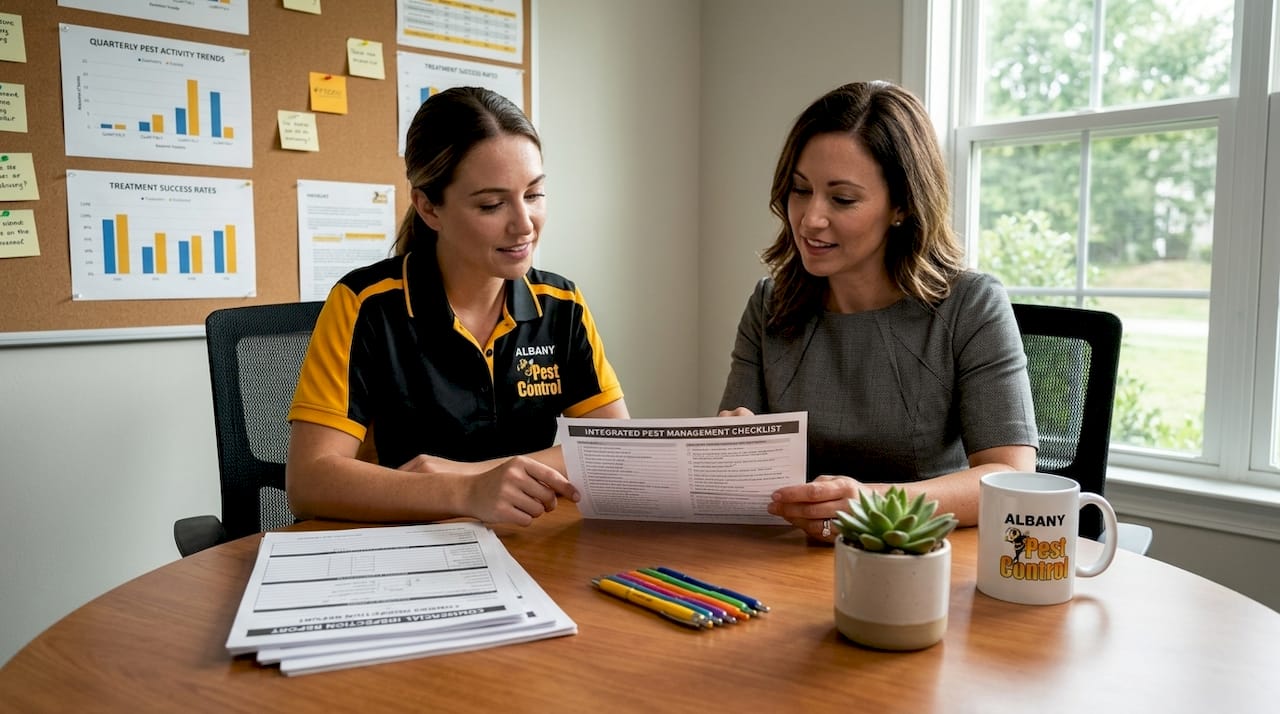
Documentation runs through every role. Every complaint, inspection, treatment, and follow-up should be logged. Properties that track this information consistently have a paper trail that protects them legally and helps identify recurring problem areas before they become expensive.
How do legal frameworks and lease agreements affect pest complaint management?
Legal obligations for property managers vary by jurisdiction, but the baseline is consistent: landlords must provide habitable, pest-free living conditions. Failing to meet that standard exposes you to rent withholding, lease termination claims, and in some states, civil penalties.
Lease language is your first line of defense. Sample lease clauses typically require tenants to report pest sightings within 24 to 48 hours, triggering a landlord-arranged inspection within 72 hours. Cost allocation then depends on whether the infestation was caused by tenant behavior or pre-existing conditions. That distinction matters enormously when a tenant demands you pay for a bed bug treatment in a unit they moved into with infested furniture.
Here is a quick comparison of how lease obligations typically differ by pest type:
| Pest type | Typical landlord obligation | Tenant cost exposure |
|---|---|---|
| Rodents (structural entry) | Full landlord responsibility for treatment and exclusion | Rarely charged to tenant |
| Cockroaches (sanitation-related) | Landlord treats, may recover costs if tenant cause proven | Possible if tenant negligence documented |
| Bed bugs | Landlord must use licensed operator; Albany law limits cost recovery to proven tenant cause | Limited; burden of proof on landlord |
| Mosquitoes (standing water on property) | Landlord must remove breeding sources and comply with notices | Shared if tenant created water accumulation |
Bed bugs deserve special attention. Under Washington DC’s Bed Bug Control Act, landlords cannot charge tenants for treatment unless the tenant’s responsibility is legally proven. That places the burden of proof squarely on you as the property owner. Jurisdiction-specific bed bug treatment workflows are not optional extras. They are compliance requirements.
Pro Tip: Include a move-in inspection checklist with photos signed by the tenant. This single document resolves more pest-related disputes than any lease clause because it establishes the unit’s condition at the start of the tenancy.
What are the best practices for handling pest complaints from reporting to resolution?
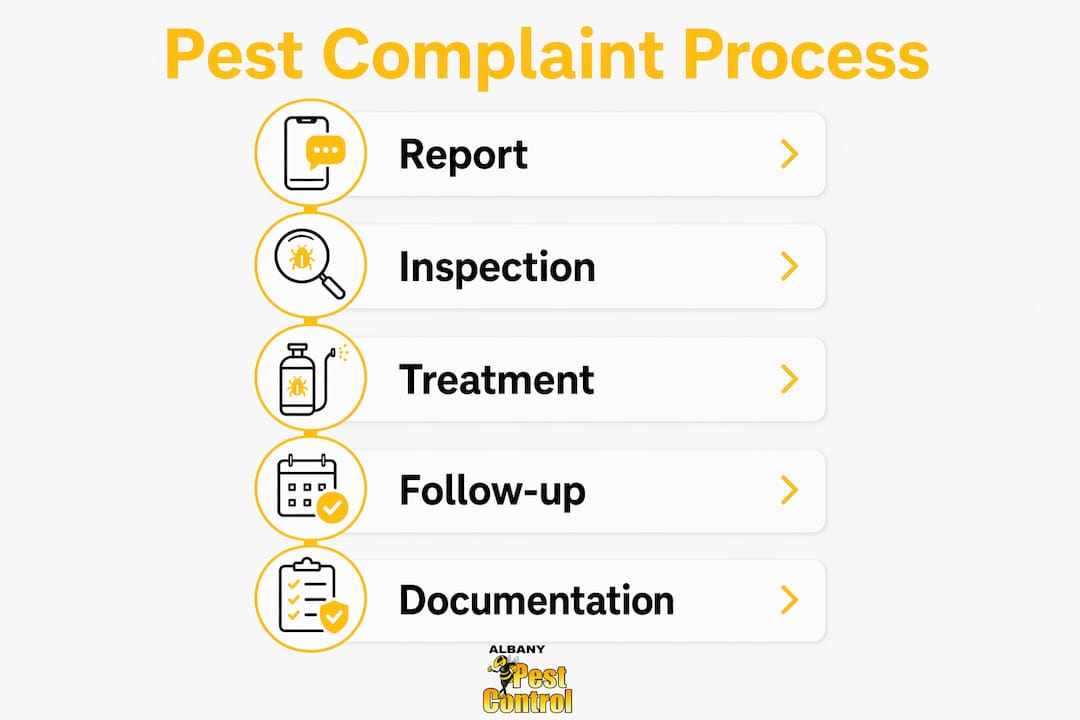
A repeatable workflow is what separates properties that resolve pest issues cleanly from those that spiral into repeated complaints and frustrated tenants. Here is the step-by-step process that works:
- Acknowledge the complaint immediately. Respond within 24 hours. Even a brief message confirming you received the report and are scheduling an inspection signals to the tenant that you take it seriously. Silence breeds escalation.
- Schedule a licensed professional inspection. Do not send maintenance to “take a look” first. A licensed PMP identifies the pest species, assesses the scope, and recommends the right treatment. Guessing costs more in the long run.
- Notify tenants in advance of treatment. EPA guidance specifically calls out advance notice and preparation instructions as critical to treatment success. Tenants who are not prepared for a treatment can accidentally undermine it entirely.
- Treat affected units collectively in multi-unit buildings. Treating only the unit where the complaint originated is one of the most common mistakes in property pest management. Pests do not respect unit boundaries. Treating adjacent units simultaneously prevents re-infestation.
- Address root causes with maintenance. After treatment, file work orders for any structural issues: gaps around pipes, cracks in foundation walls, broken door sweeps. Maintenance addressing water sources and structural gaps is the fastest way to reduce repeat complaints in multi-unit properties.
- Document everything and follow up. Log the complaint date, inspection findings, treatment applied, and follow-up inspection results. Check in with the tenant two weeks after treatment to confirm resolution.
Pro Tip: For multi-unit buildings, consider a pest control documentation system that tracks complaints by unit number and date. Patterns emerge quickly. If Unit 4B generates three complaints in six months, the problem is structural, not coincidental.
How to integrate maintenance and prevention to reduce future pest complaints
Reactive pest control is expensive. Proactive prevention is not. The properties that generate the fewest pest complaints are the ones where maintenance and pest management work from the same playbook.
The core prevention priorities look like this:
- Seal entry points. Gaps around utility pipes, cracks in foundation walls, and spaces under exterior doors are the main highways pests use to enter buildings. Steel wool, caulk, and door sweeps are cheap. Rodent exclusion after an infestation is not.
- Eliminate moisture sources. Leaking pipes, condensation around HVAC units, and standing water in basements attract cockroaches, silverfish, and rodents. Fix leaks as first-class work orders, not optional follow-up items.
- Manage waste properly. Dumpsters should have tight-fitting lids, be positioned away from building entrances, and be emptied on a regular schedule. A dumpster that overflows on weekends is essentially a pest buffet.
- Conduct regular building inspections. Walk the property quarterly with a pest management professional. Look for new entry points, evidence of activity, and maintenance issues that have been deferred. Catching a small gap before a rodent finds it is the definition of cost-effective pest management.
- Educate residents. Send a simple one-page guide at move-in covering what to report, how to store food, and how to prepare for pest control visits. Residents who understand their role in the IPM system are genuine partners, not obstacles.
Mosquito control follows the same logic. Property managers must actively remove standing water in gutters, planters, and low-lying areas and comply with any public health notices issued. Mosquitoes breed fast and the liability for disease transmission is real.
How do municipal and public health services interact with property-level pest management?
Do not count on your city to handle it. A national survey of 727 US professionals found that only 44.5% of municipalities offer rodent control services at all. That means more than half of property managers in the US are operating without any municipal backup for one of the most common pest complaints they receive. That number should recalibrate your expectations about public programs.
Here is what you can realistically expect from municipal and public health services:
| Service type | Typical availability | Property manager action required |
|---|---|---|
| Municipal rodent control | Available in roughly 44.5% of US cities | Coordinate with city program; do not rely on it as primary response |
| Mosquito abatement programs | Common in warmer climates and summer months | Remove breeding sources on property; comply with issued notices |
| Bed bug registries | Varies by state and city | Check local requirements; some jurisdictions require reporting |
| Public health inspections | Triggered by complaints or outbreaks | Maintain documentation to demonstrate compliance |
When your municipality does offer rodent control services, coordinate with them rather than treating their program as a substitute for your own. Public programs typically address public spaces and rights-of-way. Your building interior and perimeter remain your responsibility regardless of what the city does on the street.
Community collaboration matters here too. If neighboring properties are not managing their pest issues, your building will keep getting re-infested no matter how good your internal program is. Building relationships with neighboring property managers and sharing information about active infestations is not unusual. It is smart property management.
Key takeaways
Effective pest complaint management in properties requires a documented IPM system where property managers lead, tenants report promptly, maintenance fixes root causes, and licensed professionals handle inspections and treatment.
| Point | Details |
|---|---|
| IPM is the industry standard | The EPA recommends a team-based IPM approach as the foundation for all property pest complaint management. |
| Lease language protects everyone | Clauses requiring 24 to 48 hour tenant reporting and defining cost allocation reduce disputes before they start. |
| Jurisdiction rules vary significantly | Bed bug laws in particular, like DC’s Bed Bug Control Act, place the burden of proof on landlords for cost recovery. |
| Maintenance prevents repeat complaints | Sealing entry points and fixing moisture sources after treatment stops pests from returning to the same units. |
| Municipal programs are limited | Only 44.5% of US municipalities offer rodent control, so property managers need their own licensed contractor relationships. |
What 27 years of pest calls taught me about property managers
I have seen every version of this problem. The property manager who called us after a tenant had been complaining about mice for four months. The apartment complex that treated one unit while the infestation was running through six. The landlord who handed us a lease with zero pest language and then argued with a tenant about who owed what for a bed bug treatment.
Here is what I know for certain: the managers who handle pest complaints well are not the ones with the most money or the newest buildings. They are the ones who treat documentation like a professional habit, not a chore. They call us before a complaint becomes a crisis. They fix the leaky pipe under the sink the same week we treat for cockroaches, not six months later.
The biggest mistake I see? Treating the symptom and ignoring the cause. You can spray every inch of a building, but if there is a gap behind the dishwasher the size of a quarter, the mice will be back by Thursday. Pest control and maintenance have to work as one system. When they do, the complaints drop fast.
If you manage properties in the Capital Region, knowing the local pest pressure matters too. Carpenter ants and bed bugs behave differently here than they do in warmer climates, and a property manager’s guide built around Albany’s specific conditions will serve you better than generic national advice.
How Albany Pest Control supports property managers
Albany Pest Control has worked with property managers and landlords across the Capital Region for more than 27 years. We know the local pest pressure, the seasonal patterns, and the documentation requirements that matter in this region. Our licensed team handles everything from rodent exclusion to bed bug treatment, and we provide the written inspection reports and treatment records your lease agreements and compliance obligations require.
If you manage rental units, commercial spaces, or multi-family buildings in Albany or the surrounding area, Northeast pest control services built for property managers are available now. We offer service agreements that include regular preventive treatments, priority scheduling for complaint-driven inspections, and clear communication with both you and your tenants throughout every visit. Call Albany Pest Control today and get a pest management partner who understands what property managers actually need.
FAQ
What does Integrated Pest Management mean for landlords?
Integrated Pest Management (IPM) is an EPA-recommended approach where property managers coordinate tenants, maintenance staff, and licensed pest professionals to prevent and resolve infestations systematically rather than reacting to each complaint in isolation.
Who is responsible for pest control in a rental property?
Landlords are generally responsible for maintaining habitable, pest-free conditions, while tenants are responsible for timely reporting and sanitation. Cost allocation for treatment depends on the cause of the infestation and the lease language in place.
How quickly should a landlord respond to a pest complaint?
Best practice is to acknowledge a pest complaint within 24 hours and schedule a licensed professional inspection within 72 hours. Sample lease clauses commonly formalize these timelines to reduce disputes.
Can a landlord charge a tenant for bed bug treatment?
In many jurisdictions, landlords cannot charge tenants for bed bug treatment unless the tenant’s responsibility is legally proven. Under DC’s Bed Bug Control Act, the burden of proof rests with the landlord, not the tenant.
How do you prevent repeat pest complaints in multi-unit buildings?
Seal structural entry points, fix moisture sources immediately after treatment, treat adjacent units simultaneously rather than just the complaint unit, and conduct quarterly inspections with a licensed pest professional to catch new vulnerabilities early.